A full detail in Monroe resets a car. The maintenance wash is what decides how long the reset lasts. Most swirl marks and dull paint on daily drivers do not come from storms or highways. They come from ordinary home washes done with good intentions and the wrong sequence: one bucket, an old sponge, a bath towel for drying, and dirt from the rocker panels ground across the hood on the next pass. The paint keeps the record of every wash, good and bad.
This piece works as a troubleshooting guide. Start with the symptom your car is showing, match it to the wash habit that causes it, and fix the habit. The tools are cheap. The order is what matters.
Symptom: fine swirls visible in sun after washing
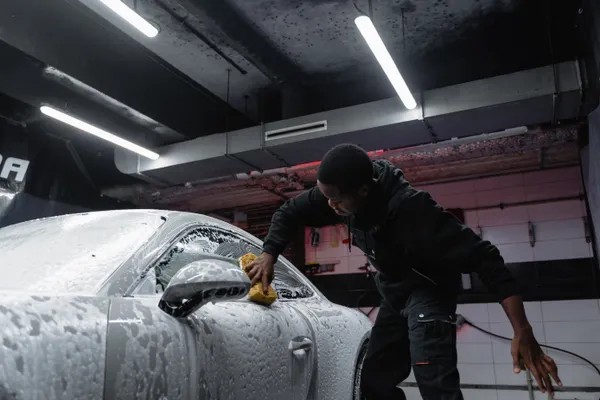
Swirls are tiny scratches in the clear coat, and washing is their main source. The cause is almost always grit carried across the paint: a mitt that picked up lower-body dirt and then washed the hood, or wash water that got dirtier with every panel. The fix is the two-bucket method. One bucket holds the soapy wash solution, the other plain rinse water, ideally each with a grit guard in the bottom. The mitt is rinsed in the plain water and the grit is scrubbed out against the guard before it ever goes back into the soap. One mitt washes, the rinse bucket takes the dirt, and the wash bucket stays clean enough to be safe on the last panel.
Wash order matters inside the method. Start at the roof and work down, and save the lower doors, rocker panels, and bumpers for last with the mitt at its dirtiest, or use a second mitt for the bottom of the car. The dirtiest surfaces never get to contaminate the cleanest ones.
Symptom: water spots that will not wipe off
Monroe water, like most municipal water in the Piedmont, carries minerals. Let wash water dry on hot paint in summer sun and those minerals etch spots into the surface. The cause is time and temperature, not the soap. Wash in shade or in the cooler ends of the day, work one side at a time so panels do not dry mid-wash, and dry the car immediately and completely afterward. A plush microfiber drying towel, or two, beats a bath towel or chamois for both safety and speed, and a blower for mirrors and trim keeps the drips that cause spot trails from appearing an hour later.
Spots caught fresh wipe away with a damp microfiber. Spots etched over a summer of driveway washes are a polishing job, which is the professional line for this symptom.
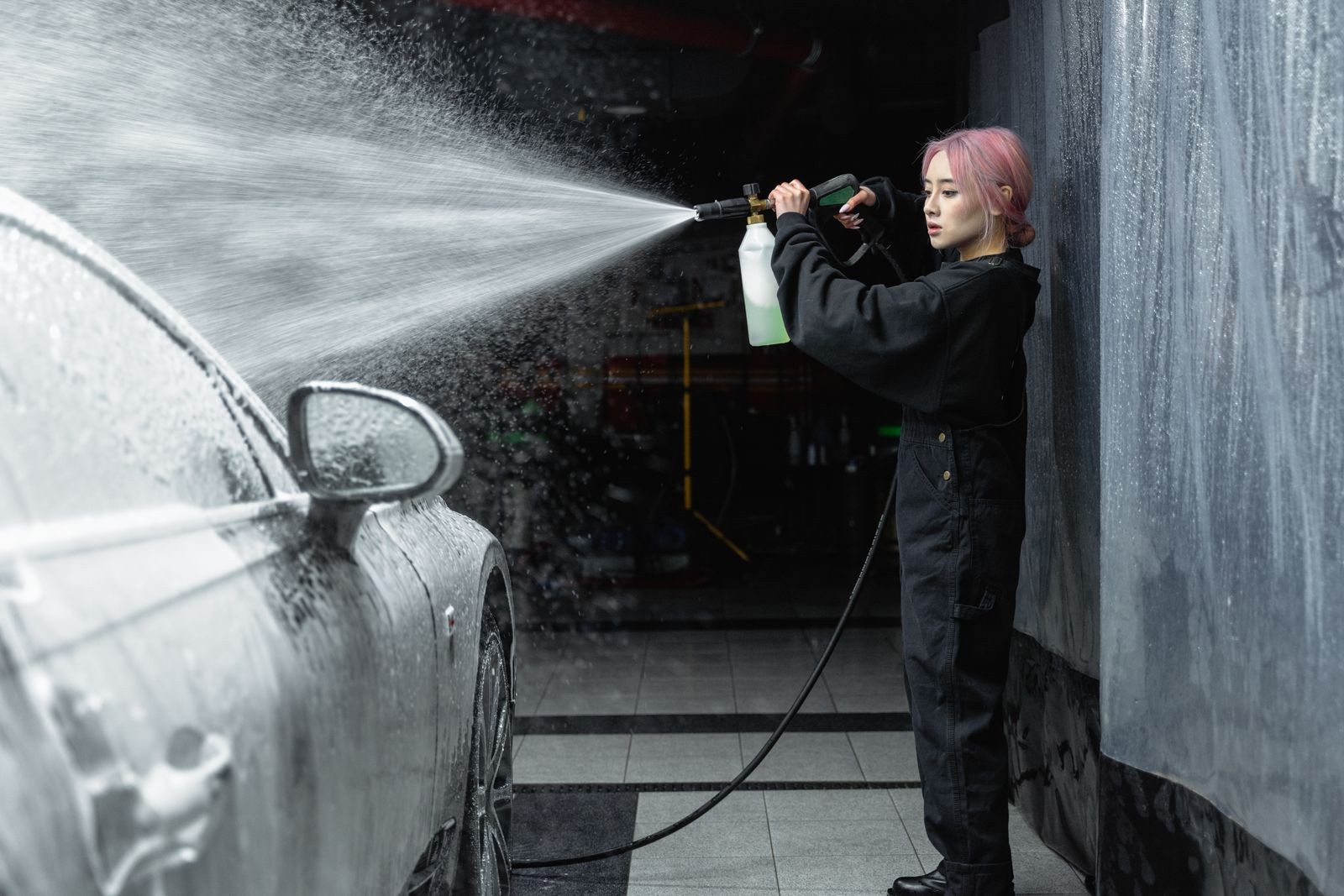
The maintenance wash, in order
- Pre-rinse and pre-soak. Rinse the loose grit off first. A foam cannon pre-soak is the deluxe version, and it genuinely helps by floating dirt off before contact. A thorough hose rinse is the workable minimum.
- Wheels and tires first, with separate tools. Brake dust is abrasive and the wheels are the dirtiest part of the car. Their brushes and mitt never touch paint, on this wash or any later one.
- Two-bucket wash, top down. Roof, glass, hood, upper doors, then lower panels last. Rinse the mitt in the plain bucket between panels, every panel, not just when it looks dirty.
- Rinse each section as you finish it. Soap drying on paint in summer heat leaves its own film and spots. Keep the whole car wet until the final rinse.
- Dry with clean microfiber, using a light touch. Lay the towel and pull, or blot, rather than scrubbing. If you drop a towel on the driveway, it is done for the day. Grit in a dropped towel is tomorrow's swirls.
- Finish glass and door jambs. Clean glass last with its own towel to avoid spreading wax or dressing. Jambs take thirty seconds with the drying towel and keep the detailed look intact.
Symptom: the car looks dull a month after a detail
Often the dullness is not lost wax. It is film: traffic film, pollen baked on through spring, and soap residue from washes that were rinsed too fast. Through Monroe's pollen season, a yellow-green layer bonds surprisingly fast, and a gentle wash alone may smear rather than remove it. The fix at home is patience and contact: a proper pre-soak dwell, a methodical mitt wash, and an unhurried final rinse. If a clean panel still feels rough to a bare hand after washing, the roughness is bonded contamination that washing cannot remove. That is clay-bar and professional territory, and forcing it at home with aggressive scrubbing trades contamination for scratches.
How often, and when to hand it back to a pro
Every two weeks is a workable rhythm for a daily driver in this climate, stretching in winter and tightening during pollen season and after trips on salted or muddy roads. Between details, the maintenance wash is preservation, not correction. When swirls accumulate despite careful washing, when water spots etch, or when the paint feels rough after a proper wash, the car is asking for machine work again, and a shop like Ed Hall Detailing can judge how much correction the clear coat can safely take. Keeping up the wash habits above is what stretches the time between those visits from months to a year or more.
Common questions
Is a foam cannon necessary for a safe wash?
No. It is a helpful pre-soak that reduces contact-wash effort, but the two-bucket method, clean mitts, and proper drying deliver most of the benefit with basic equipment.
Can I use dish soap if I am out of car shampoo?
It will clean, but it also strips wax and sealant, undoing the protection a detail leaves behind. Car shampoo is made to clean without removing that layer, and it is the right default for every maintenance wash.
Why do my towels leave lint and streaks on glass?
Usually detergent and fabric softener residue built up in the towels. Wash microfiber separately, without fabric softener, and keep a dedicated glass towel that never touches wax, dressing, or wheels.
Photos in this guide are representative stock images.
← All guides from Ed Hall Detailing← Back to Ed Hall Detailing